
Embarking on a musical journey with the piano is wonderfully accessible today, particularly with the rise of convenient PDF learning materials.
These digital resources offer a flexible and cost-effective path for aspiring pianists,
allowing practice anywhere, anytime, and catering to diverse learning preferences.
From comprehensive courses to focused exercises, PDF piano books provide structured lessons,
supplemented by online tutorials and interactive tools,
making the initial stages of piano education more engaging and efficient.
Why Choose a PDF Piano Book for Beginners?
For those first venturing into the world of piano, a PDF book presents a compelling starting point, offering several distinct advantages over traditional methods. Firstly, accessibility is paramount. Unlike physical books, PDFs are instantly downloadable, eliminating shipping costs and wait times – a crucial benefit for eager learners.
Secondly, cost-effectiveness is a significant draw. Many excellent beginner piano PDFs are available for free or at a fraction of the price of their printed counterparts. This allows aspiring musicians to explore the instrument without a substantial financial commitment. Furthermore, PDFs offer enhanced portability. You can access your piano lessons on any device – tablet, laptop, or smartphone – making practice convenient wherever you are.
Digital formats also facilitate interactive learning. Features like zoom, annotations, and bookmarks allow for personalized study and efficient navigation. Combined with online resources, a PDF piano book forms a powerful and adaptable learning ecosystem, perfectly suited for the modern beginner.
Benefits of Digital Piano Learning Resources
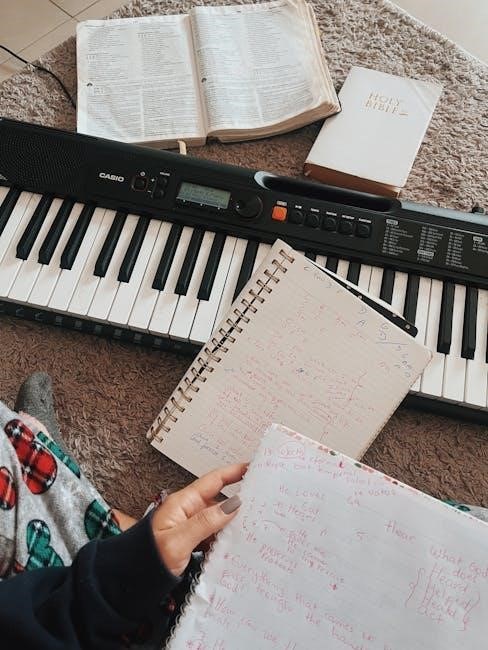
Digital piano learning resources, particularly PDF books, unlock a wealth of advantages beyond the traditional classroom setting. Interactive features are key; PDFs allow for annotation, highlighting, and bookmarking, fostering a personalized learning experience. This adaptability extends to device compatibility, enabling practice on tablets, laptops, and smartphones – learning anytime, anywhere.
Furthermore, digital resources often integrate seamlessly with online tutorials and apps, creating a holistic learning environment. Metronome apps, easily paired with PDF lessons, enhance rhythm and timing. The cost-effectiveness is also notable, with many free or affordable PDF options available, reducing the financial barrier to entry.
Digital formats also promote eco-friendliness by reducing paper consumption. Ultimately, these resources empower beginners with flexibility, accessibility, and a dynamic approach to mastering the piano, supplementing traditional methods effectively.
Essential Elements of a Beginner Piano Book
A solid beginner piano book PDF must cover fundamental concepts: key recognition, musical notation, basic theory, and proper hand positioning.
These elements build a strong foundation for musical growth.
Understanding Piano Keys and Notation
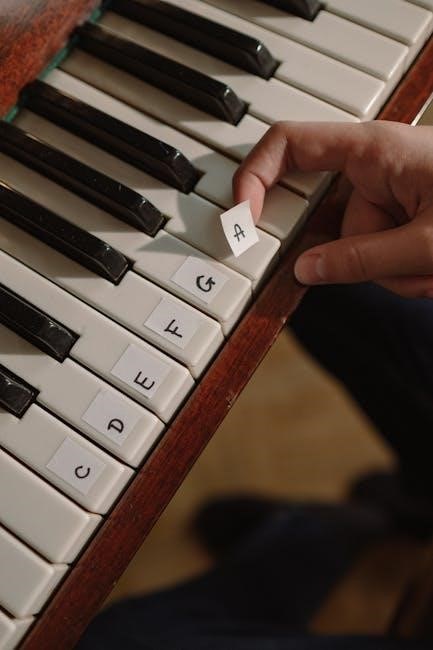
A crucial first step in any beginner piano book PDF is mastering the layout of the piano keys. This involves identifying white keys (A, B, C, D, E, F, G) and black key groupings – sets of two and three. Understanding this pattern is vital for navigating the instrument and reading music.
Simultaneously, the book should introduce standard musical notation. This includes the staff (five lines and four spaces), clef signs (treble and bass), notes, rests, and time signatures. Beginners often struggle with associating notes on the staff with specific keys on the piano, so clear diagrams and exercises are essential.
Effective PDF resources will utilize visual aids, like keyboard diagrams with note names labeled, and progressively introduce new notes and rhythms. Learning to read notation isn’t just about recognizing symbols; it’s about understanding their duration and pitch, translating them into physical actions on the piano. Practice exercises focusing on note recognition and simple melodies are key to solidifying this understanding.
Basic Music Theory for Piano Players

A good beginner piano book PDF won’t shy away from fundamental music theory. Concepts like scales (major and minor), chords (major, minor, seventh), and key signatures are foundational for understanding how music is constructed. These aren’t just abstract ideas; they directly impact what you play on the piano.
The book should explain intervals – the distance between two notes – and how they contribute to melody and harmony. Understanding rhythm is also crucial, covering time signatures, note values (whole, half, quarter, eighth), and rests.
Effective PDFs will present theory in a practical context, relating it directly to piano playing. For example, explaining how chords are built and then showing how to play them on the keyboard. Exercises that involve identifying intervals, building chords, and clapping rhythms will reinforce these concepts, making theory less daunting and more applicable.
Hand Position and Posture

A quality beginner piano book PDF will dedicate significant attention to proper hand position and posture. This isn’t merely about aesthetics; it’s vital for preventing injury and developing efficient technique. The book should emphasize a relaxed, curved hand shape, as if holding a small ball, avoiding tension in the wrists and arms.
Clear illustrations and diagrams are essential to demonstrate the correct positioning of fingers, wrists, and forearms. Posture is equally important – sitting upright with a straight back, feet flat on the floor (or a footrest), and maintaining a comfortable distance from the piano.
The PDF should include exercises designed to build strength and flexibility in the hands and wrists, while reinforcing correct technique. Warnings about common pitfalls, like flat fingers or tense shoulders, will help beginners avoid developing bad habits early on.
Top Recommended Piano Book PDFs for Beginners
Several established piano methods are readily available in PDF format, offering structured learning paths for newcomers.
These resources provide comprehensive lessons, exercises, and musical pieces,
catering to various learning styles and preferences.
Popular choices include Alfred’s, Faber, and Thompson’s methods, each with unique strengths and approaches to piano instruction,
making selection a personal journey.
“Alfred’s Basic Adult Piano Course” ⸺ PDF Availability
Alfred’s Basic Adult Piano Course is a widely recognized and highly regarded method for beginner adult piano students. Its strength lies in its clear, concise explanations and gradual progression, making it ideal for self-learners; The course emphasizes both technique and musicality, introducing fundamental concepts in a logical and accessible manner.
Finding PDF versions of Alfred’s Basic Adult Piano Course requires careful consideration of legality. While some websites offer free downloads, these often infringe on copyright. Purchasing a legitimate PDF copy directly from Alfred Music or authorized retailers ensures you receive a complete and accurate version of the material, supporting the creators and avoiding potential legal issues.
The PDF format offers several advantages, including portability and the ability to easily zoom in on musical notation. Many PDFs also allow for annotations, enabling students to mark up the music with fingerings, dynamics, and other helpful reminders. Levels 1 and 2 are most commonly sought after by beginners, providing a solid foundation in piano playing. Remember to supplement the book with audio examples for proper pronunciation and rhythm.
“Faber Piano Adventures” ⸺ Beginner Level PDF Options
Faber Piano Adventures is a popular series known for its engaging approach to piano learning, particularly for beginners. The series emphasizes a multi-key approach, introducing concepts in several keys simultaneously to foster a broader understanding of music theory. It’s celebrated for its colorful illustrations and motivating repertoire, making practice more enjoyable.
PDF availability for Faber Piano Adventures beginner levels (Primer Level, Level 1, and Level 2A) varies. Similar to Alfred’s, legitimate PDF purchases are recommended to ensure quality and support copyright. While free, unauthorized PDFs circulate online, they may be incomplete or contain errors. Purchasing through Faber Music’s website or reputable music retailers guarantees a complete and accurate learning experience.
The PDF format allows for interactive learning, with features like playback of accompanying tracks and the ability to annotate scores. These beginner levels focus on foundational skills like note reading, rhythm, and hand position. Supplementing the book with the accompanying CD or online audio resources is crucial for developing a strong musical ear.
“John Thompson’s Modern Course for the Piano” ⸺ PDF Resources
John Thompson’s Modern Course for the Piano is a long-standing, traditional method favored for its systematic and progressive approach to piano instruction. It’s known for its emphasis on technique and a gradual introduction of musical concepts, building a solid foundation for future learning. The course is particularly strong in developing reading skills and finger dexterity.
PDF versions of Thompson’s Modern Course, particularly the beginner books (First Grade Book and Second Grade Book), are available for purchase from various online music retailers. As with other piano methods, be cautious of free, illegally distributed PDFs, as they may lack quality or completeness. Investing in a legitimate PDF ensures access to the full curriculum and supporting materials.
The PDF format offers convenience for printing specific exercises or annotating scores directly. This course emphasizes a structured approach, with clear explanations and a wealth of exercises to reinforce each concept. Supplementing the book with a teacher’s guidance can greatly enhance the learning experience, especially for beginners.

Utilizing PDF Piano Books Effectively
Maximizing your learning requires strategic PDF use: leverage zoom for clarity, annotations for notes, and bookmarks for quick navigation.
Combine these resources with online tutorials and consistent metronome practice for optimal progress.
Navigating PDF Features: Zoom, Annotations, and Bookmarks

PDF piano books offer a surprisingly interactive learning experience beyond simply reading static pages. Mastering the built-in features can dramatically enhance your practice. Zoom functionality is crucial, especially for beginners struggling with complex musical notation. Increasing magnification allows for clearer viewing of notes, rhythms, and fingerings, reducing eye strain and improving comprehension.
Annotations are equally valuable. Don’t hesitate to use highlighting tools to mark important concepts, fingerings suggested by the book, or sections you find particularly challenging. Adding text notes directly onto the PDF allows you to create a personalized study guide, clarifying difficult passages and recording your own insights.
Finally, utilize bookmarks extensively. Instead of flipping through pages, create bookmarks for each lesson, exercise, or musical piece. This creates a navigable table of contents within the PDF, allowing you to quickly jump to specific sections and maintain a structured learning flow. Effective use of these features transforms a simple PDF into a dynamic and personalized piano learning tool.
Combining PDF Learning with Online Tutorials
While PDF piano books provide a solid foundation, integrating them with online tutorials unlocks a more comprehensive learning experience. PDFs excel at presenting structured lessons and notation, but often lack the dynamic demonstration a visual learner needs. Online tutorials, particularly on platforms like YouTube, bridge this gap by offering visual and auditory explanations of techniques.
Search for tutorials that specifically address the concepts presented in your PDF book. This reinforces understanding and provides alternative perspectives. For example, if your book introduces a new chord, find a video demonstrating its proper fingering and sound. Don’t solely rely on one source; explore multiple tutorials to gain a well-rounded grasp of the material.
This blended approach – the structure of a PDF combined with the visual clarity of online resources – accelerates progress and fosters a deeper connection with the music. It’s a powerful synergy for any beginner pianist.
Practicing with a Metronome (Digital or App-Based)
A crucial, often overlooked, element of successful piano learning, especially when utilizing a PDF book, is consistent practice with a metronome. PDFs offer the notes and exercises, but they can’t provide the steady beat essential for developing accurate timing and rhythm. Digital metronomes or readily available metronome apps are invaluable tools for beginners.
Start slowly! Choose a tempo where you can comfortably play the exercise or piece from your PDF book without rushing or hesitating. Gradually increase the tempo as your accuracy improves. Focus on maintaining a consistent beat, even if it means simplifying the music initially.
Practicing with a metronome builds muscle memory and internalizes the rhythmic structure of the music. It’s a discipline that will pay dividends as you progress, allowing for more expressive and confident playing. Don’t view it as a constraint, but as a partner in your musical development.

Finding Free vs. Paid Piano Book PDFs
Navigating the world of piano book PDFs reveals a spectrum of options, ranging from complimentary resources to premium, professionally compiled materials. Careful consideration
of legality and content quality is essential for a rewarding learning experience.
Legality and Copyright Considerations
When exploring free piano book PDFs, it’s crucial to understand the implications of copyright law. Downloading and using copyrighted material without permission is illegal and unethical, potentially leading to legal repercussions. Many free PDFs circulating online are unauthorized copies, violating the rights of authors and publishers.
Legitimate sources for free content often include public domain materials – older books where copyright has expired – or sample chapters provided by publishers for promotional purposes. Always verify the source’s credibility and ensure the PDF is legally distributed. Supporting creators by purchasing legitimate copies, even in digital format, ensures continued production of high-quality learning resources.
Be wary of websites offering “free” versions of popular piano courses, as these are frequently pirated. Opting for paid, authorized PDFs guarantees access to complete, accurate, and legally sound materials, contributing to a more ethical and sustainable learning environment. Respecting copyright fosters a thriving musical education ecosystem.
Reliable Sources for Free Beginner Piano PDFs
Finding genuinely free and legal piano PDFs requires careful navigation. The IMSLP (International Music Score Library Project) is a fantastic resource, offering a vast collection of public domain sheet music, including beginner piano pieces and exercises. Project Gutenberg also hosts older piano method books now in the public domain.
Many publishers offer sample chapters or introductory lessons as free PDFs to showcase their courses. Websites like Musicnotes.com sometimes provide free sheet music arrangements suitable for beginners. Look for educational institutions or piano teachers who may share free resources on their websites or blogs.
Exercise caution with general search results, as many links lead to unauthorized copies. Prioritize websites with clear copyright information and a reputation for legal content distribution. Remember, while free resources are valuable, investing in a quality, authorized PDF often provides a more comprehensive and structured learning experience.
Investing in Premium PDF Piano Books for Comprehensive Learning
While free resources offer a starting point, premium PDF piano books provide a significantly more structured and in-depth learning experience. These often include progressive lessons, detailed explanations of music theory, and a wider range of exercises to build technique.
Reputable publishers like Alfred, Faber, and Thompson offer comprehensive PDF versions of their popular piano courses. These typically feature audio accompaniments, interactive elements, and clear instructional diagrams. Investing in a premium PDF ensures access to accurate, well-organized content created by experienced piano educators.
Consider the long-term benefits: a comprehensive PDF can serve as your primary learning tool for months or even years. The structured approach and detailed explanations accelerate progress and build a solid foundation in piano playing. Look for PDFs with accompanying audio files for accurate pronunciation and rhythm.

Supplementary Resources for Piano Beginners
Enhance your PDF piano learning journey with online platforms and YouTube tutorials. These resources offer diverse perspectives,
demonstrations, and supplementary exercises to solidify your understanding and skills.
Explore interactive lessons and personalized feedback to accelerate your progress and make practice more enjoyable.
Online Piano Learning Platforms
Complementing your PDF piano book with an online learning platform can dramatically accelerate your progress. These platforms often provide interactive lessons, personalized feedback, and a structured curriculum that aligns well with beginner-level PDF materials. Many offer features like note recognition, allowing you to play along and receive immediate assessment of your accuracy.
Popular options include Flowkey, Skoove, and Simply Piano. Flowkey, for example, boasts a vast library of songs and courses, adapting to your skill level as you improve. Skoove focuses on real-time feedback and personalized learning paths, while Simply Piano gamifies the learning process, making it particularly engaging for beginners.
These platforms often integrate with MIDI keyboards, providing a more immersive and interactive experience. Consider exploring free trials to determine which platform best suits your learning style and complements your chosen PDF piano book. They offer a dynamic supplement to static PDF content, fostering a more well-rounded and effective learning experience.
YouTube Channels for Piano Tutorials
YouTube serves as an invaluable, and often free, resource to supplement your PDF piano book learning. Numerous channels offer comprehensive tutorials, covering everything from basic music theory to specific song breakdowns, perfectly suited for beginners. Visual demonstrations are incredibly helpful when grasping new concepts presented in your PDF material.
Highly recommended channels include Hoffman Academy and Lypur. Hoffman Academy provides a structured curriculum, mirroring the progression found in many beginner piano books, with clear explanations and engaging lessons; Lypur focuses on contemporary music and offers tutorials for popular songs, making learning more enjoyable.
Other valuable channels include Pianote and Josh Wright Piano TV. These channels offer diverse content, from technique tips to performance advice. Remember to search for tutorials specifically addressing concepts from your PDF book to reinforce your understanding. YouTube provides a dynamic visual aid, enhancing your overall learning experience and bridging gaps in comprehension.