Manual Safety: A Comprehensive Guide
Prioritizing employee welfare and adhering to OSHA mandates, this guide details crucial safety management aspects, encompassing historical regulations and modern procedures.
Manual safety is a critical component of workplace health, encompassing procedures to minimize risks associated with physical tasks. Effective safety management, as mandated by OSHA, isn’t solely about compliance; it’s fundamentally about preserving employee well-being. This involves understanding potential hazards inherent in lifting, carrying, and repetitive movements.
Historically, industrial safety regulations evolved from 19th-century legislation addressing poor factory conditions. Today, a proactive approach is essential. While radiological emergencies are addressed with specific protocols – prioritizing medical needs as radiation levels from research materials aren’t life-threatening – general manual handling risks require consistent attention. Policies covering diverse procedures, including aerial lift operation, are vital for a safe environment.
The Importance of Manual Handling Risk Assessments
Proactive risk assessments are paramount in preventing manual handling injuries and fostering a robust safety culture. These assessments identify potential hazards – evaluating tasks for awkward postures, repetitive motions, and excessive force. A thorough evaluation isn’t merely a procedural step; it’s a commitment to employee welfare, aligning with OSHA’s mandates for a safe working environment.
Consistent execution of safety protocols, much like a successful food-service program, is crucial. Ignoring potential risks can lead to incidents, necessitating reporting and documentation. While radiological waste disposal requires specific EH&S approval, everyday lifting tasks demand equally diligent assessment. Policies addressing varied procedures, from warehouse logistics to construction, must be informed by these evaluations.
Understanding Common Manual Handling Injuries
Manual handling tasks frequently contribute to musculoskeletal disorders (MSDs), impacting employee well-being and productivity. These injuries range from sprains and strains – often resulting from improper lifting – to more chronic conditions affecting the back, neck, and upper limbs. Recognizing early symptoms is vital for prompt intervention and preventing escalation.
While radiological emergencies are prioritized, the prevalence of MSDs demands consistent attention. Poor workstation design, repetitive motions, and inadequate training all contribute to risk. Effective safety management, mandated by OSHA, necessitates understanding these common injury patterns. Just as consistency is key in food-service, consistent hazard identification and mitigation are crucial for preventing these preventable injuries.
Ergonomic Principles in Manual Handling
Applying ergonomic principles minimizes strain, promoting neutral spine alignment and utilizing leg strength for safe lifting – vital for preventing MSDs.
Proper Lifting Techniques
Effective lifting begins with planning; assess the load’s weight and path before attempting to move it. Maintain a firm grip, keeping the load close to your body throughout the lift. Bend your knees, not your back, utilizing the power of your leg muscles to initiate the movement.
Avoid twisting during the lift; pivot your feet to change direction. Keep your back straight and maintain a natural curve. Lift smoothly and steadily, avoiding jerky motions. Lower the load using the same proper form as lifting.
Remember, seeking mechanical assistance, like dollies or hand trucks, is always preferable when dealing with heavy or awkward loads, reducing the risk of injury significantly.
Maintaining a Neutral Spine During Lifting
Preserving a neutral spine is paramount during manual handling to minimize stress on vertebral discs and surrounding muscles. This involves maintaining the natural ‘S’ curve of your back, avoiding excessive rounding or arching.
Engage your core muscles to support your spine, acting as a natural stabilizer. Imagine a straight line running from your ear, shoulder, hip, and knee – this alignment promotes proper posture.
Avoid bending forward at the waist; instead, hinge at the hips while keeping your back straight. Proper lifting techniques, combined with core engagement, safeguard against back injuries and promote long-term spinal health.
The Role of Leg Strength in Safe Lifting
Strong leg muscles are fundamental to safe manual handling, acting as the primary power source for lifting movements. Relying on leg strength, rather than back muscles, significantly reduces the risk of strains and injuries.
When lifting, initiate the movement by bending at the knees and hips, keeping your back straight. This engages the quadriceps, hamstrings, and gluteal muscles, distributing the load effectively.
Regular exercise to strengthen these muscle groups enhances lifting capacity and improves overall body mechanics. Prioritizing leg strength is a proactive step towards preventing musculoskeletal disorders and ensuring a safer work environment.

Workplace Design and Manual Handling
Optimizing workstation height and minimizing reaching are key to reducing strain; implementing mechanical aids further enhances safety and efficiency in the workplace.
Optimizing Workstation Height
Adjustable workstations are paramount for accommodating diverse employee physiques and tasks. Proper height minimizes reaching, bending, and awkward postures, directly reducing strain on the musculoskeletal system.
Work surfaces should allow elbows to be bent at approximately 90 degrees while shoulders remain relaxed. For seated work, ensure feet are flat on the floor or supported by a footrest.
When tasks require standing, alternate positions frequently and utilize anti-fatigue mats. Regularly assess workstation setups to confirm they continue to support safe and efficient work practices.
Consider the weight and frequency of handled items when determining optimal heights for material presentation, reducing lifting distances and promoting neutral body mechanics.
Minimizing Reaching and Stretching
Excessive reaching and stretching significantly elevate the risk of musculoskeletal disorders. Frequently used items should be positioned within easy reach, ideally within the primary work zone – the area directly in front of the worker.
Rearranging workspaces to reduce travel distances and eliminate unnecessary movements is crucial. Utilize shelves, drawers, and adjustable equipment to bring materials closer.
Avoid overhead reaching whenever possible, as it places significant stress on the shoulders and upper back. Implement mechanical aids or redesign tasks to eliminate this requirement.
Regularly assess work practices to identify and address instances of awkward reaching or prolonged stretching, fostering a safer and more ergonomic work environment.
Implementing Mechanical Aids for Lifting
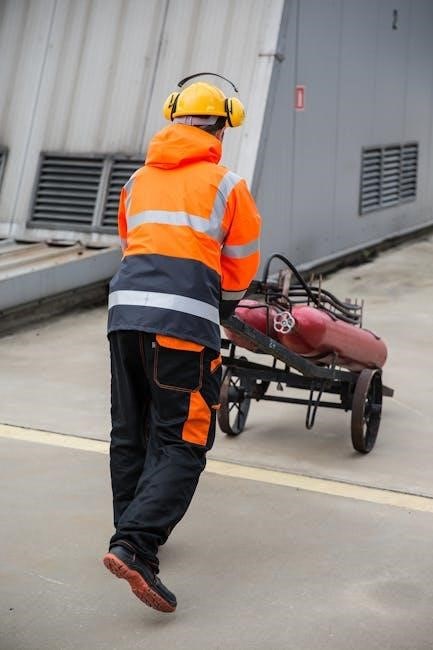
Whenever feasible, prioritize the use of mechanical aids to reduce or eliminate manual lifting tasks. Devices like dollies, hand trucks, forklifts, and pallet jacks significantly decrease physical strain and the risk of injury.
Proper training on the safe operation of these aids is paramount; employees must understand load limits, stability considerations, and operational procedures.
Regular inspection and maintenance of mechanical aids are essential to ensure their continued safe functionality. A malfunctioning device poses a greater risk than manual lifting itself.
Assess tasks to determine the most appropriate aid for the load’s weight, size, and destination, optimizing efficiency and minimizing worker exposure to hazards.
Legal and Regulatory Framework for Manual Safety
OSHA guidelines mandate employer responsibility for employee safety, including comprehensive manual handling procedures and reporting protocols for incidents.
OSHA Guidelines for Manual Handling
The Occupational Safety and Health Administration (OSHA) plays a pivotal role in establishing and enforcing standards for workplace safety, with specific attention to manual handling risks. These guidelines emphasize the importance of proactive risk assessments to identify potential hazards associated with lifting, carrying, pushing, and pulling tasks.
OSHA recommends a hierarchical approach to control hazards, prioritizing elimination or reduction of manual handling tasks whenever feasible. When manual handling is unavoidable, engineering controls – such as mechanical aids and workstation modifications – are encouraged. Administrative controls, including safe work practices and training programs, are also crucial.
Furthermore, OSHA mandates proper training for employees on safe lifting techniques, hazard recognition, and reporting procedures. Compliance with these guidelines is not only a legal requirement but also a fundamental aspect of fostering a safe and healthy work environment, minimizing the risk of musculoskeletal disorders.
Employer Responsibilities Regarding Manual Safety
Employers bear a significant responsibility for ensuring a safe working environment concerning manual handling tasks. This extends beyond mere compliance with OSHA regulations; it necessitates a proactive and comprehensive safety management system. A core duty involves conducting thorough manual handling risk assessments to identify potential hazards within the workplace.
Employers must implement appropriate control measures based on these assessments, prioritizing hazard elimination or reduction. Providing necessary equipment, such as mechanical aids, and modifying workstations to minimize strain are crucial steps.
Crucially, employers are obligated to deliver comprehensive training to employees on safe manual handling techniques, hazard awareness, and proper reporting procedures. Fostering a strong safety culture, where employees are encouraged to report concerns without fear of reprisal, is paramount to preventing injuries and promoting well-being.
Employee Rights and Reporting Procedures
Employees possess fundamental rights concerning workplace safety, particularly regarding manual handling tasks. These rights include the right to a safe working environment, access to comprehensive training on safe lifting techniques, and the freedom to voice safety concerns without fear of retribution.
A clear and accessible reporting procedure is essential. Employees should know how to promptly report any manual handling-related hazards, near misses, or injuries to designated personnel – supervisors, safety officers, or EH&S departments.
Employers are legally obligated to investigate all reported incidents thoroughly and implement corrective actions to prevent recurrence. Documentation of these reports and investigations is vital. Employees also have the right to request assistance with tasks that pose a risk and to refuse unsafe work when immediate danger exists.
Specific Industries and Manual Handling Challenges
Construction, healthcare, and warehousing present unique manual handling risks, demanding tailored safety protocols and specialized training for employees.
Construction Site Manual Handling
Construction sites inherently pose significant manual handling challenges due to the frequent lifting of heavy materials, awkward postures, and repetitive tasks. Workers routinely handle lumber, concrete blocks, and tools, increasing the risk of musculoskeletal disorders (MSDs). Implementing robust safety measures is paramount.
Proper planning, utilizing mechanical aids like dollies and hand trucks, and employing team lifting strategies are crucial. Thorough risk assessments must identify potential hazards, and comprehensive training programs should educate workers on correct lifting techniques and the importance of maintaining a neutral spine.
Regular site inspections and adherence to OSHA guidelines are essential for preventing injuries and fostering a safety-conscious culture. Prioritizing ergonomic principles and providing appropriate personal protective equipment (PPE) further mitigate risks.
Healthcare Manual Handling Procedures
Healthcare professionals face unique manual handling risks, frequently assisting patients with mobility, transferring them between beds and chairs, and repositioning them for care. These tasks often involve awkward postures, sustained exertions, and unpredictable patient movements, leading to a high incidence of MSDs among healthcare workers.
Specific procedures must prioritize both patient and staff safety. Training should emphasize proper body mechanics, safe patient handling techniques, and the use of assistive devices. Regular refresher courses are vital to reinforce best practices.
Risk assessments should identify high-risk tasks, and policies should outline clear protocols for safe patient handling. Any medical emergency always takes priority, but radiological safety protocols must also be considered when handling patients undergoing related treatments.
Warehouse and Logistics Manual Handling
Warehouse and logistics environments present significant manual handling challenges due to the repetitive nature of tasks and the frequent lifting, carrying, and stacking of heavy or bulky items. Workers are often exposed to risks associated with prolonged bending, twisting, and reaching, increasing the potential for musculoskeletal disorders (MSDs).
Implementing mechanical aids like dollies and hand trucks is crucial for minimizing manual effort. Optimizing workstation height and minimizing reaching distances are also essential ergonomic considerations.
Comprehensive training programs should focus on proper lifting techniques, safe stacking procedures, and the correct use of equipment. A strong safety culture, coupled with consistent execution of safety protocols, is paramount for preventing injuries.
Training and Education for Manual Safety
Effective programs, regular updates, and fostering a robust safety culture are vital for equipping employees with the knowledge to prevent injuries.
Developing Effective Manual Handling Training Programs
Creating impactful training necessitates a multifaceted approach. Programs should clearly outline proper lifting techniques, emphasizing a neutral spine and leveraging leg strength – foundational elements for safe handling.
Beyond technique, training must cover risk assessment procedures, enabling employees to identify and mitigate hazards within their specific work environments. Practical, hands-on exercises are crucial, allowing participants to apply learned principles in simulated scenarios.
Furthermore, programs should address the correct use of mechanical aids like dollies and hand trucks, and detail emergency procedures for reporting injuries. Consistency in delivery and content is paramount, ensuring all employees receive standardized, high-quality instruction.
Regular Refresher Courses and Updates
Maintaining a robust safety culture demands continuous learning. Regular refresher courses are vital to reinforce initial training and address evolving workplace conditions or new equipment. These updates shouldn’t simply reiterate old information; they should incorporate lessons learned from incident reports and near misses.
Updates must also reflect changes in regulations, such as OSHA guidelines, ensuring compliance and minimizing legal risks. Brief, focused sessions – perhaps quarterly – can be more effective than lengthy annual reviews.
Promoting a proactive safety mindset requires consistent communication and readily available resources, fostering a workplace where safety is everyone’s responsibility.
Promoting a Safety Culture
A truly effective manual safety program extends beyond training and regulations; it necessitates cultivating a strong safety culture. This involves leadership demonstrating commitment, actively participating in safety initiatives, and consistently reinforcing safe practices. Open communication is paramount – employees must feel comfortable reporting hazards and near misses without fear of reprisal.
Recognizing and rewarding safe behaviors encourages positive reinforcement, while consistently addressing unsafe acts demonstrates accountability. Consistency in program execution, like in food-service, is key; standardized procedures ensure everyone understands expectations.
Ultimately, safety becomes ingrained in the organization’s values, not just a set of rules.

Emergency Procedures and First Aid
Medical emergencies always take precedence, even over radiological concerns; prompt response, thorough reporting, and accurate documentation are vital for incident management.
Responding to Manual Handling Injuries
Immediate action is crucial when a manual handling injury occurs. Prioritize medical attention, recognizing that any medical emergency supersedes radiological concerns, even in research settings where radioactive materials are present.
Ensure the injured individual receives appropriate first aid, and promptly report the incident following established procedures. Thorough documentation is essential, detailing the event, contributing factors, and actions taken.
This documentation supports investigations and helps prevent future occurrences. Remember, a proactive safety culture emphasizes reporting, allowing for continuous improvement and safeguarding employee well-being.
Effective response minimizes injury severity and demonstrates a commitment to a safe working environment.
Reporting and Documentation of Incidents
Comprehensive reporting and meticulous documentation are cornerstones of effective safety management. All manual handling incidents, regardless of severity, must be reported promptly through designated channels.
Detailed records should include the date, time, location, individuals involved, a precise description of the event, and any contributing factors identified.
Thorough documentation facilitates investigations, identifies trends, and informs preventative measures.
This process isn’t merely about compliance; it’s about fostering a culture of safety where learning from incidents is prioritized, ultimately protecting employees and improving workplace conditions.
Accurate records are vital for legal and regulatory adherence, demonstrating a commitment to employee well-being.
Radiological Emergency Protocols (Prioritizing Medical Emergencies)
While manual safety focuses on physical risks, protocols must acknowledge potential interactions with other hazards, including radiological materials. It’s crucial to understand that any medical emergency always takes precedence over a radiological incident.
Research facilities utilizing radioactive materials are designed to prevent life-threatening radiation exposure.
However, clear procedures must be in place for responding to any incident involving these materials, ensuring swift evacuation and appropriate medical attention.
Personnel should be trained to recognize potential hazards and follow established protocols, prioritizing immediate medical care while mitigating radiological risks.
Effective communication and coordination are essential during any emergency response.
Advanced Manual Handling Techniques
Employing team lifting, assistive devices like dollies, and ensuring aerial/scissor lift safety are vital for complex tasks and minimizing strain.
Team Lifting Strategies
When objects exceed individual lifting capacity, team lifting becomes essential. A designated team leader must coordinate the lift, communicating clear commands – “lift,” “lower,” and “stop” – to synchronize movements. Before lifting, the team should assess the load’s weight and center of gravity, planning the route and identifying potential obstacles.
Each team member should maintain a firm grip, using proper lifting techniques, and move in unison. Communication is paramount throughout the lift; any team member experiencing difficulty must immediately signal a halt. Regular practice and training are crucial to ensure effective coordination and minimize the risk of injury.
Proper footwork and maintaining a neutral spine are equally important for each participant, reinforcing safe lifting principles even within a team context.
Using Assistive Devices (e.g., dollies, hand trucks)
Employing assistive devices like dollies and hand trucks significantly reduces manual handling risks. Before use, inspect the device for damage – wheels, handles, and load securing mechanisms – ensuring it’s in safe working order. Distribute the load evenly to maintain stability and prevent tipping.
When maneuvering, maintain a clear path, watching for obstacles and pedestrians. Avoid excessive speed and sharp turns. Secure the load properly before transport, utilizing straps or restraints to prevent shifting during movement.
Training on the correct and safe operation of each device is vital. Remember, assistive devices aid lifting, they don’t eliminate the need for safe practices.
Aerial Platform and Scissor Lift Safety
Aerial platforms and scissor lifts, while increasing work access, demand strict safety protocols. Prior to operation, a thorough inspection is crucial – check guardrails, tires, and hydraulic systems. Operators must be properly trained and authorized, understanding load limits and safe operating procedures.
Always wear a full-body harness secured to a designated anchor point. Be mindful of overhead obstructions – power lines, structures – maintaining a safe distance. Avoid sudden movements and never exceed the platform’s capacity.
Regular maintenance and adherence to manufacturer guidelines are essential for safe operation.
The History of Industrial Safety Regulations
19th-century U.S. legislation initiated factory work condition regulation, evolving into comprehensive safety standards addressing hazards and prioritizing worker well-being.
Early Legislation and Factory Conditions
The dawn of the industrial revolution brought unprecedented challenges to worker safety. Early factories, particularly in the 19th century, were often characterized by dangerous conditions – long hours, inadequate ventilation, and a complete lack of safety protocols.
Initial legislative efforts in the United States focused on regulating these harsh conditions, though enforcement was often weak. These early laws aimed to address some of the most egregious hazards, but comprehensive safety regulations were still decades away.
Manual handling, a core component of factory work, presented significant risks. Workers routinely lifted heavy loads without proper training or equipment, leading to injuries. The absence of ergonomic considerations and mechanical aids exacerbated these dangers, contributing to a high incidence of musculoskeletal disorders.
Evolution of Safety Standards
Following initial, limited legislation, safety standards gradually evolved throughout the 20th century, driven by increasing awareness of workplace hazards and advocacy for worker protection. The focus expanded beyond basic factory conditions to encompass specific risks, including those associated with manual handling.
Key developments included the establishment of organizations like OSHA, which provided a framework for enforcing safety regulations and conducting inspections. Ergonomic principles began to influence guidelines for lifting and material handling, emphasizing proper techniques and the use of mechanical aids.
Continuous refinement of these standards remains crucial, adapting to new technologies and emerging risks. Modern approaches prioritize preventative measures, comprehensive training, and a proactive safety culture to minimize manual handling injuries.
Consistency in Food-Service Program Execution & Safety
While seemingly unrelated, the principle of consistent execution, vital in food service, directly translates to manual handling safety. Standardized procedures minimize variability, reducing the risk of improper lifting or awkward movements. If employees aren’t consistently trained in safe techniques, injuries are more likely to occur.
Just as recipe adherence ensures food quality, consistent application of ergonomic principles – proper posture, lifting techniques, and utilizing aids – safeguards worker well-being. A lack of uniformity creates opportunities for shortcuts and unsafe practices.
Therefore, a robust training program and regular audits are essential to maintain both food safety and manual handling safety standards across all operations.