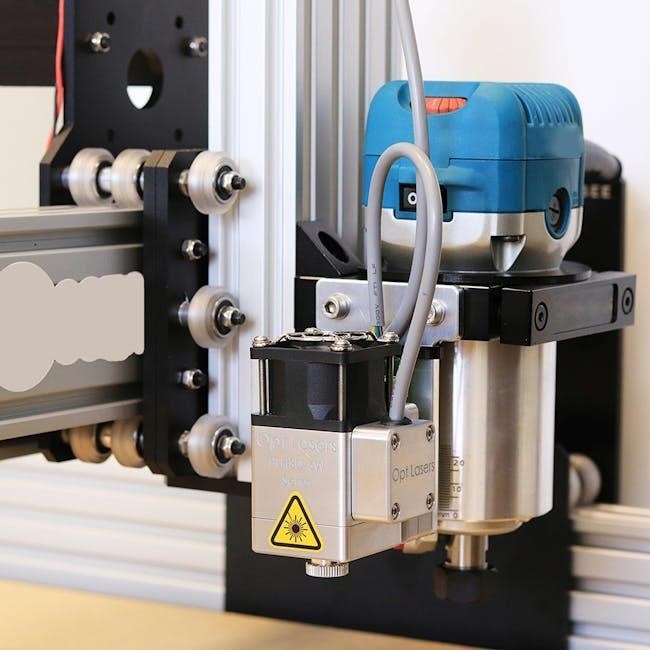
Linear guide bearing blocks, crucial for precision movement, counteract cantilevered loads—ideal for hobbyists or demanding industrial applications requiring rigidity and accuracy.
What are Linear Guide Bearing Blocks?
Linear guide bearing blocks are the core components enabling smooth, precise linear motion within a system. They work in conjunction with linear guide rails, utilizing rolling elements – balls or rollers – to minimize friction. These blocks effectively transform rotational motion into linear movement, handling loads and maintaining accuracy. Their compact form factor and high rigidity make them suitable for diverse applications, from 3D printers to industrial machinery, offering a cleaner and more precise alternative to standard bearings.
Applications of Linear Guide Bearing Blocks
Linear guide bearing blocks find extensive use across various industries. They are vital in 3D printers and laser cutters, ensuring precise component positioning. Industrial machinery, robotics, and CNC machines heavily rely on their rigidity and lifespan. Shorter-stroke applications benefit from cross-roller guides, offering compactness. Ultimately, any project needing controlled linear motion—from hobbyist builds to high-precision manufacturing—can leverage these blocks.
Types of Linear Guide Bearing Blocks
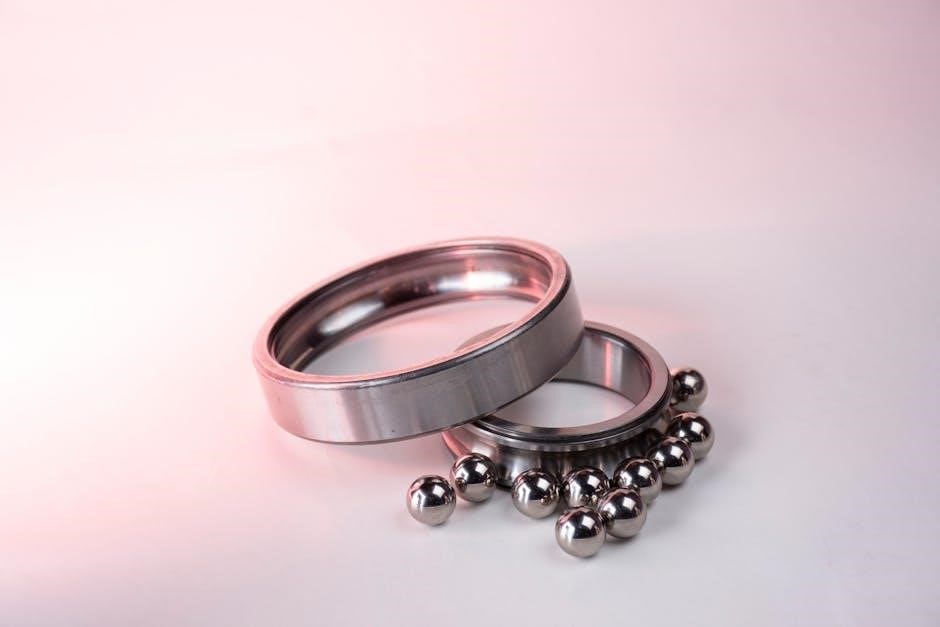
Linear guide bearing blocks come in three main types: ball bearing, roller bearing, and cross roller bearing, each offering unique advantages for different applications.
Ball Bearing Linear Blocks
Ball bearing linear blocks are a common and cost-effective choice, utilizing recirculating ball bearings for smooth motion. While precise individually, carriage design and mounting can introduce potential slop. They require wider spacing and additional space compared to alternatives.
These blocks are suitable for lighter loads and less demanding applications, offering a balance between performance and affordability, especially in hobbyist projects.
Roller Bearing Linear Blocks
Roller bearing linear blocks offer increased load capacity compared to ball bearing types, utilizing cylindrical rollers for enhanced support. They provide good rigidity, though potentially less precision than high-quality linear rails.
These blocks represent a middle ground in performance and cost, suitable for applications needing greater load handling without extreme precision demands, like some 3D printer builds.
Cross Roller Bearing Linear Blocks
Cross roller bearing linear blocks are designed for compactness and high rigidity, employing rollers arranged perpendicularly within the block. This configuration excels in short-stroke applications where space is limited and stiffness is paramount.
Frequently utilized in industrial settings demanding precision in constrained areas, they offer a robust solution, though typically at a higher cost than simpler bearing options.
Key Features and Specifications
Linear guide bearing blocks are defined by load capacity, precision, and material—steel or aluminum—with preload impacting rigidity and overall system performance.
Load Capacity and Ratings
Linear guide bearing blocks exhibit varying load capacities—static and dynamic—dictated by block size and bearing type. Ratings consider radial, moment, and axial forces. Higher preload generally increases load capacity but can reduce smooth motion. Selecting the appropriate rating is vital; underestimation causes premature failure, while overestimation increases cost unnecessarily. Industrial applications demand precise calculations based on anticipated loads and operational conditions.
Precision and Accuracy
Linear guide bearing blocks offer exceptional precision, often stemming from ground and hardened rails. Preload adjustments significantly impact accuracy, minimizing backlash and enhancing rigidity. High-quality rails deliver superior performance, crucial for applications demanding tight tolerances. However, factors like mounting and fastener integrity influence overall system precision, potentially introducing slop or wear over time.
Material Composition (Steel, Aluminum, etc.)
Linear guide bearing blocks commonly utilize steel for rails and blocks, offering high rigidity and durability. Aluminum is sometimes used for lighter applications, though it compromises strength. The choice impacts load capacity and lifespan. Carriage assemblies may combine materials; for example, aluminum extrusions paired with steel bearings.
Linear Guide Rail Systems
Linear rail systems provide cleaner, more compact form factors than standard bearings, offering various profiles, sizes, and mounting options for optimal rigidity.
Rail Profiles and Sizes
Rail profiles significantly impact load capacity and rigidity; common types include round, square, and profiled rails, each suited for different applications. Sizes vary widely, influencing system precision and stability. Selecting the appropriate profile and size depends on factors like the expected load, required accuracy, and available space within the overall design. Ground and hardened rails are frequently used for high-quality systems, ensuring durability and smooth operation.
Mounting Options for Rails
Mounting rails securely is critical for performance; options include direct mounting via tapped holes, using mounting brackets, or employing adhesive methods. Proper fastener selection and torque are essential to prevent loosening and maintain alignment. Consideration must be given to the rail material and the supporting structure to ensure stability and minimize vibration, impacting overall system accuracy.
Preload and Rigidity
Preload, the initial force applied to the bearing block, significantly impacts rigidity and precision. Higher preload minimizes backlash and increases stiffness, crucial for high-accuracy applications. However, excessive preload can increase friction and reduce lifespan. Selecting the appropriate preload balances rigidity requirements with smooth operation and longevity of the linear guide system.
Advantages of Using Linear Guide Bearing Blocks
Linear guide bearing blocks offer exceptional rigidity, stability, and smooth, precise motion, alongside a long lifespan – key benefits for various applications.
High Rigidity and Stability
Linear guide bearing blocks excel in maintaining high rigidity due to their design and often hardened, precision-ground rails. This characteristic minimizes deflection under load, crucial for applications demanding accuracy. The reduced support length, compared to standard bearings, is compensated by the block’s construction, providing exceptional stability even during high acceleration or with heavy masses. This inherent stiffness translates to consistent performance and reduced vibration, enhancing overall system reliability.
Smooth and Precise Motion
Linear guide bearing blocks facilitate smooth and precise motion through minimized friction and consistent contact. Preload adjustments in higher-quality systems further enhance rigidity and eliminate play. This precision is vital for applications like 3D printers and laser cutters, where accuracy directly impacts output quality. The compact form factor also contributes to reduced wobble and improved control, ensuring reliable performance.
Long Lifespan and Durability
Linear guide bearing blocks boast a long lifespan and durability, particularly in industrial settings, due to hardened and ground rail surfaces. Consistent support along the guide length minimizes wear compared to standard bearings. While maintenance is needed, their robust construction resists loosening and deformation, ensuring sustained precision over extended operational periods, even with heavy loads.

Disadvantages and Considerations
Linear guide bearing blocks can be costly, and require consistent maintenance; they’re also sensitive to contamination, potentially impacting performance and longevity of the system.
Cost Compared to Other Bearing Types
Compared to standard ball bearings, linear guide systems generally represent a higher initial investment, though hidden costs within carriage designs can equalize expenses. Linear bearings fall in between, offering a balance.
However, considering lifecycle costs, the durability and precision of linear rails often justify the price. Standard bearings are cheapest, but may require more frequent replacement due to wear and potential slop accumulation.
Maintenance Requirements
Linear guide bearing blocks typically require less frequent maintenance than standard ball bearings, primarily focusing on lubrication to ensure smooth operation and prevent wear. Regular cleaning is vital, especially in dusty environments, to avoid contamination.
Monitoring for fastener tightness and inspecting guide rails for damage are also crucial preventative measures, contributing to a prolonged lifespan and consistent performance.
Sensitivity to Contamination
Linear guide bearing blocks, while durable, exhibit sensitivity to contamination like dust and debris, which can compromise precision and accelerate wear. Maintaining a clean operating environment is paramount for optimal performance.
Sealed bearing block designs offer enhanced protection, but regular inspection and cleaning remain essential to prevent abrasive particles from impacting the system’s longevity.
Choosing the Right Linear Guide Bearing Block
Selecting the ideal block hinges on form factor, application needs—precision, load, speed—and budget constraints, balancing performance with project requirements effectively.
Form Factor and Space Constraints
Considering available space is paramount when selecting linear guide bearing blocks. Standard ball bearings demand wider spacing and extra room, while linear bearings and rails offer a cleaner, more compact design.
Cross-roller guides excel in short-stroke applications due to their minimized footprint. Evaluate how much dedicated space your project allows for motion components; this directly influences the feasibility of each bearing type and overall system integration.
Application Specific Needs (Precision, Load, Speed)
Tailor your selection to the demands of your project. High-precision tasks benefit from preloaded linear rails, offering exceptional rigidity and accuracy. Heavier loads require blocks with higher load ratings, while faster movements necessitate minimizing friction.
For 3D printers or laser cutters, standard bearings may suffice, but demanding applications prioritize linear rail systems for their superior performance characteristics.
Budget Considerations
Cost varies significantly based on quality and type. Standard ball bearings are the most affordable, though carriage design costs can be hidden. Linear bearings represent a mid-range expense, while high-quality linear rails with hardened surfaces command a premium price.
Balance performance needs with financial constraints; hobbyist projects may prioritize affordability, while industrial applications justify higher investment.
Comparison with Alternative Bearing Systems
Compared to standard ball bearings or V-wheel systems, linear rails offer superior compactness, precision, and rigidity, though at a potentially higher initial cost.
Standard Ball Bearings
Standard ball bearings present a cost-effective solution, readily available in diverse sizes, but necessitate wider spacing and additional structural support. While individually precise, carriage design can introduce accumulated slop due to mounting fastener loosening or guide material wear. They lack the inherent rigidity and compact form factor of linear rails and bearings, potentially impacting overall system accuracy and stability, especially in demanding applications.
V-Wheel Systems
V-Wheel systems, though a viable alternative, weren’t directly compared in detail within the provided text. However, the context suggests linear rails offer superior rigidity and precision. V-wheels are often used in 3D printers and laser cutters, offering a budget-friendly option, but may exhibit less consistent performance and durability compared to dedicated linear guide bearing block systems, particularly under high loads or acceleration.

Installation and Mounting Best Practices
Proper alignment and leveling are critical during installation, alongside selecting appropriate fasteners and adhering to specified torque values for optimal performance.
Alignment and Leveling
Achieving precise alignment and leveling is paramount for linear guide bearing block systems. Misalignment introduces binding, increases friction, and drastically reduces lifespan. Utilize precision measuring tools – levels, straight edges, and dial indicators – to verify rail parallelism and flatness. Ensure mounting surfaces are adequately prepared and free from debris. Consistent leveling across the entire rail length minimizes stress and guarantees smooth, accurate motion, preventing premature wear and maintaining optimal performance.
Fastener Selection and Torque
Proper fastener selection and torque application are critical for securing linear guide bearing blocks. Use fasteners rated for the material and load. Avoid over-tightening, which can distort mounting surfaces and impede smooth motion. Consult manufacturer specifications for recommended torque values; utilize a calibrated torque wrench. Regularly inspect fasteners for loosening due to vibration or dynamic loads, ensuring consistent clamping force and system stability.
Maintenance and Troubleshooting
Regular lubrication and inspection are key to maintaining linear guide bearing blocks, addressing issues like contamination or fastener loosening promptly for optimal performance.
Lubrication Guidelines
Proper lubrication significantly extends the lifespan of linear guide bearing blocks. Use a high-quality grease compatible with the block’s material, applying it periodically to minimize friction and wear. Frequency depends on load and operating environment; heavier loads require more frequent lubrication. Avoid over-greasing, as it attracts contaminants. Regularly wipe away excess lubricant and reapply as needed to ensure smooth, precise motion and prevent premature failure.
Identifying and Addressing Common Issues
Common problems include stiffness due to contamination or lack of lubrication, and looseness from fastener issues or wear. Inspect for debris, relubricate, and tighten fasteners. Excessive play suggests bearing block damage, requiring replacement. Address mounting misalignment promptly to prevent accelerated wear and maintain precision. Regular checks are vital for optimal performance.
Industry Standards and Certifications
Linear guide bearing blocks often adhere to DIN and ISO standards, ensuring quality, interchangeability, and performance benchmarks across manufacturing and applications.
DIN Standards
DIN standards, specifically DIN 5412 and related specifications, govern the dimensional accuracy, tolerances, and material properties of linear guide bearing blocks and rails. These German standards ensure consistent quality and interchangeability between components from different manufacturers. Adherence to DIN standards facilitates easier integration into existing systems and promotes reliable performance, particularly within European industrial machinery and automation applications. They cover aspects like preload classes and surface finish requirements.
ISO Standards
ISO standards, notably ISO 1209-1 relating to ball screw systems, indirectly influence linear guide bearing block specifications. While a dedicated ISO standard for solely linear guides is less common, ISO 9001 certification for manufacturers ensures quality control. Furthermore, ISO standards cover aspects like hardness testing and material composition, impacting the durability and performance of these critical components in global industrial applications.
Future Trends in Linear Guide Technology
Emerging trends include self-lubricating bearing blocks for reduced maintenance and integrated sensor technology, enhancing precision and enabling smart, adaptive linear motion systems.
Self-Lubricating Bearing Blocks
Self-lubricating linear bearing blocks represent a significant advancement, minimizing or eliminating the need for external lubrication systems. These blocks incorporate solid lubricants, like polymers or coatings, directly into the bearing material. This reduces maintenance, lowers operational costs, and is beneficial in environments where traditional lubricants are undesirable or impractical. They offer extended lifespan and consistent performance, particularly in challenging applications, though initial costs may be higher.
Integrated Sensor Technology
Integrated sensor technology within linear guide bearing blocks is a growing trend, enhancing performance and enabling smart automation. These blocks can incorporate sensors for position, force, or vibration monitoring, providing real-time data for precise control and predictive maintenance. This integration streamlines systems, reduces cabling, and improves overall efficiency, particularly in high-precision industrial applications demanding advanced feedback.